



The spacesuit worn by Franz Vierb ö ck
Franz Vierb ö ck was Austria's first astronaut who traveled to the MIR space station on October 2, 1991 aboard the Soyuz TM-13 rocket. The Sokol spacesuit he is wearing is a soft pressure suit designed and manufactured by NPP Zvezda. The main purpose of this spacesuit is to maintain the life of astronauts in the event of an unexpected depressurization of the spacecraft.

Trial version of the "Sea Eagle" extravehicular activity spacesuit
Orlan "(Russian: Орлан, Chinese: Sea Eagle) is a series of semi-rigid integrated extravehicular activity spacesuits designed and manufactured by the Soviet Institute of Astrology. This type of spacesuit has been used for extravehicular activities in the Soviet space program, as well as in other countries' space programs, including NASA. The Orlan spacesuits were used for extravehicular activities on the Salyut space station, but for the Mir space station, they were replaced by Orlan-DMA and Orlan-M spacesuits.
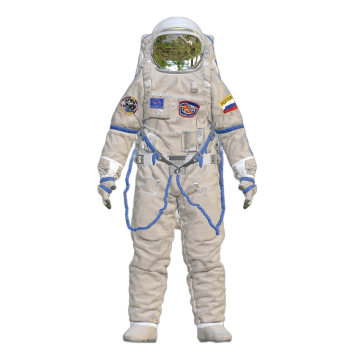
Seahawk extravehicular activity spacesuit
Orlan "is a series of semi-rigid integrated extravehicular activity spacesuits designed and manufactured by the Russian Academy of Sciences. This type of spacesuit has been used for extravehicular activities in Russia's space program, as well as in other countries' space programs, including NASA. The first extravehicular activity of the Orlan spacesuit occurred on December 20, 1977, at the Soviet space station Salyut 6, with the mission Soyuz 26. Astronauts Yuri Romanenko and Georgi Grechko tested the Orlan-D spacesuit.

Feitian "extravehicular spacesuit
On September 27, 2008, Chinese astronauts conducted their first spacewalk, and the first set of extravehicular spacesuits developed by China, "Feitian," made its debut in the vast space over 300 kilometers away from Earth. According to the China Manned Space Engineering Office, as of 11:02 am Beijing time on July 4, 2021, astronauts Liu Boming and Tang Hongbo, wearing China's independently developed new generation "Feitian" extravehicular spacesuits, have successfully exited the Tianhe core module node module.
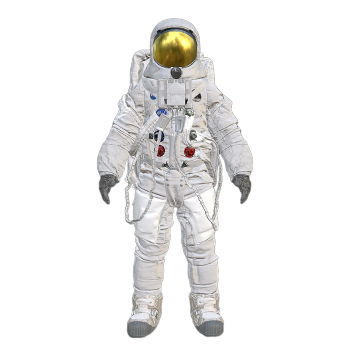
Apollo 11 space suit
The Apollo 11 spacesuit was worn by astronauts during the Apollo 11 mission to the moon. This spacesuit is made of 21 layers of nested fabric, sturdy enough to block micrometeorites but flexible enough for astronauts to do all the work they need on the moon. These spacesuits are works of Playtex company. The main components include a set of pressure suit components and a backpack, which contains a life support system that allows astronauts to walk freely on the surface of the moon. The waist, knees, and elbows of the spacesuit are made of sea latex, making it convenient for astronauts to move around.
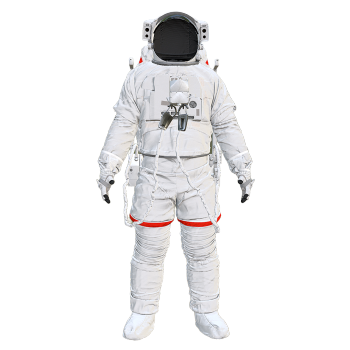
Exploratory extravehicular activity maneuvering device
The Exploration Extravehicular Mobility Unit (xEMU) is an independent humanoid spacesuit that provides astronauts with environmental protection, mobility, life support, and communication. This type of spacesuit is designed for extravehicular activity (EVA) in Earth orbit.
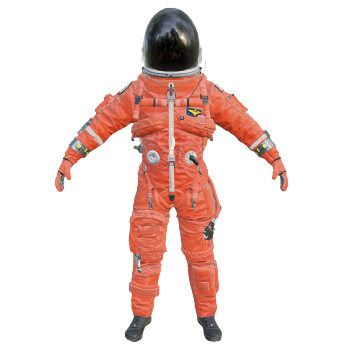
Orion Crew Survival System
This orange NASA spacesuit is named the Orion Crew Survival System. The spacesuit is lighter, stronger, fits snugly, has stronger temperature control, and can be worn and taken off more quickly. If there is an emergency situation such as pressure loss caused by broken spacecraft glass, this spacesuit can support astronauts to survive for up to 6 days, providing time guarantee for their return to Earth.

Popular Models
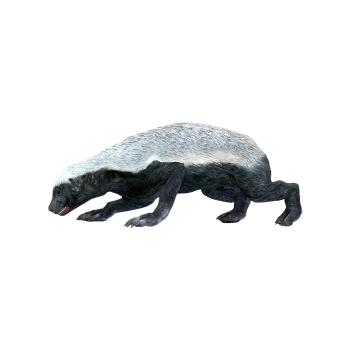
Honey Badger (3D animated model)
194 View
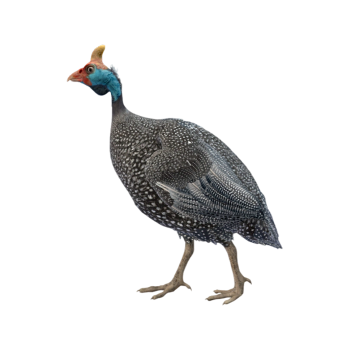
Guinea fowl (3D animated model)
165 View
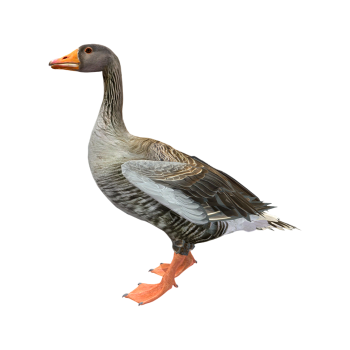
Wild Goose (3D animated model)
187 View
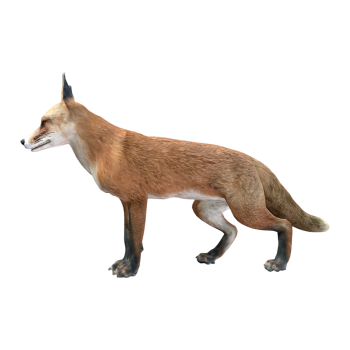
Red Fox (3D animated model)
155 View
Random Model


Emblem of the Russian Empire
846 View

Potato
432 View

Red Wing Classic Mock Boots
669 View

Sallia cono specimen
852 View
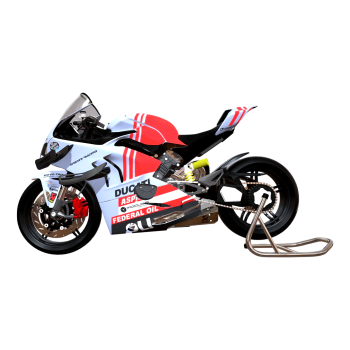
Ducati Panigale Heavy Motorcycle
729 View


Track train toy (with animation)
172 View
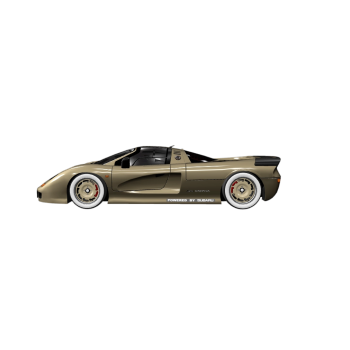
road version of super run
573 View